

Rainwater-Grown Strawberries Under Polytunnel: A Grower Case Study Using S-Chelate 12 Star

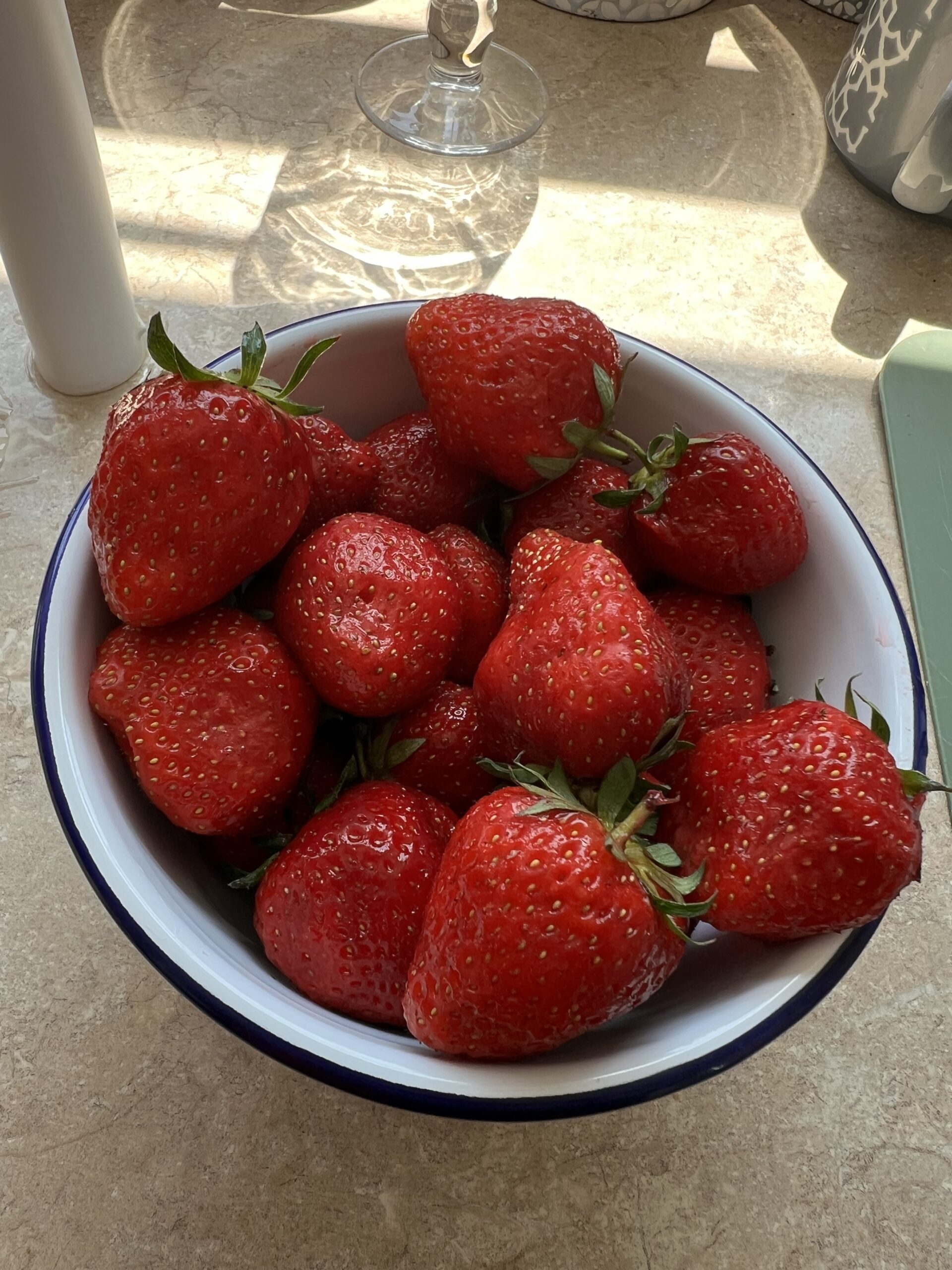
Some of the most useful feedback we receive does not come from trials or test plots, but from growers quietly getting on with growing food. When a system works well, it tends to show up quickly in crops like strawberries, where plant health, fruit quality and cropping duration are all easy to see.
This article shares one such example. Strawberries were grown under a polytunnel using harvested rainwater, with S-Chelate 12 Star applied roughly every one to two weeks as the sole source of nutrition. The grower, David Rodwell, reported a steady supply of strawberries from the first week of May through to late June.
Rather than presenting this as a formal trial, we are sharing it as practical grower feedback. It highlights how a complete, chelated feed can support strawberries in a protected system where irrigation water contributes little or no nutrition of its own.
Key Takeaways
- Strawberries were grown under a polytunnel using harvested rainwater as the irrigation source
- S-Chelate 12 Star was applied roughly every one to two weeks as the sole nutritional input
- The grower reported a daily bowl of strawberries from early May through to late June
- Using a complete feed simplified nutrition where rainwater provided no minerals
- Consistent, balanced feeding supported a steady cropping period rather than a short flush
Did you know? In this example, all plant nutrition came from one product, with no additional fertilisers or supplements used.
Growing Strawberries Under Protection
Why strawberries respond quickly to good nutrition
Strawberries are fast-moving plants. Once established, they move rapidly from leaf growth into flowering and fruiting, particularly under polytunnel conditions where temperatures are more stable and growth starts earlier.
During this period, plants require:
- Consistent nitrogen to support leaf area and photosynthesis
- Adequate phosphorus for root activity and flower development
- High potassium to support fruit size and quality
- Reliable calcium supply to support cell structure as fruit expands
- A full range of micronutrients to keep plant metabolism running smoothly
Any interruption in nutrient supply often shows up as uneven fruiting, smaller berries, or a shortened cropping window.
Rainwater changes the nutritional equation
Harvested rainwater is widely used in protected growing. It is clean, readily available and free from salts, but it does not bring dissolved calcium or trace elements into the root zone in the way that mains water often does.
When rainwater is used, the fertiliser effectively becomes the only source of nutrition for the crop. This places more importance on using a complete feed rather than relying on partial nutrition or separate components.
What S-Chelate 12 Star Is Designed to Do
 S-Chelate 12 Star is a complete feed developed to supply macro, secondary and micronutrients together in a single, water-soluble formulation. It is produced in the UK and is designed for use across a wide range of crops and growing systems.
Typical application methods
- Watering can feeding
- Fertigation systems
- Continuous feed or low-dose programmes
The product is classified as a complete feed and is not organic certified, but it is biologically friendly chelated. It is designed to simplify feeding by removing the need for separate trace element products or binary fertiliser systems.
For growers using rainwater, this approach ensures that essential elements such as calcium and micronutrients are supplied consistently alongside NPK.
Nutrient Profile of S-Chelate 12 Star
The formulation of S-Chelate 12 Star reflects its role as a single-input fertiliser. Nutrients are supplied in soluble or chelated forms to support availability in a wide range of growing conditions. Download the full PDF here >
Elemental composition
| Nutrient | Content (%) |
| Nitrogen (N) | 7.6 |
| Phosphorus (P) | 3.3 |
| Potassium (K) | 18.1 |
| Calcium (Ca) | 2.0 |
| Sulphur (S) | 1.2 |
| Iron (Fe) | 0.69 |
| Magnesium (Mg) | 0.4 |
| Manganese (Mn) | 0.4 |
| Boron (B) | 0.12 |
| Copper (Cu) | 0.08 |
| Zinc (Zn) | 0.2 |
| Molybdenum (Mo) | 0.03 |
Why this balance matters for strawberries
- Potassium supports fruit development and flavour
- Calcium contributes to fruit structure and shelf life
- Magnesium supports chlorophyll and energy production
- Iron, manganese and zinc support enzyme systems and growth regulation
By supplying these elements together, the product supports steady growth throughout the fruiting period.
The Rodwell Strawberry Example
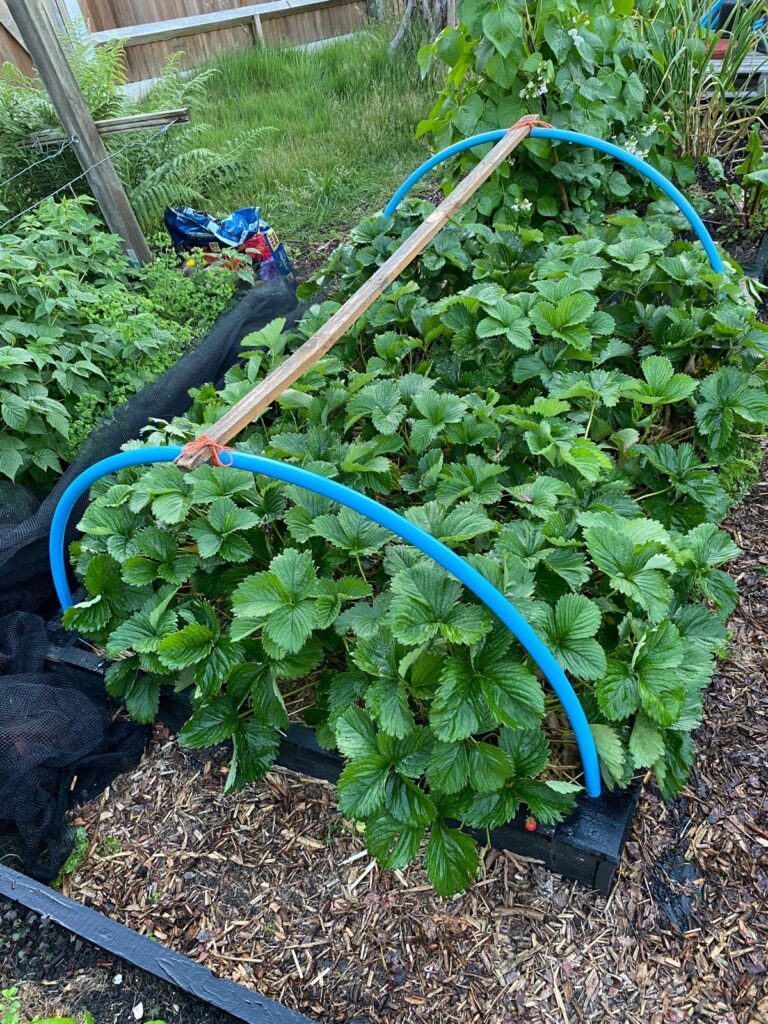
The growing setup
The strawberries were grown under a polytunnel, providing protection from rainfall and helping to extend the productive season. Irrigation was supplied using harvested rainwater.
Nutritional input came solely from S-Chelate 12 Star. Applications were made approximately every one to two weeks during the growing season. No additional fertilisers or mineral supplements were used.
This created a simple and consistent feeding routine, particularly well suited to a rainwater-based system.
What was observed
Feedback shared that harvesting a bowl of strawberries every day from the first week of May. Cropping continued through May and June, with the plants largely finishing by late June.
The fruit quality and yield were described positively, and the cropping period was sustained over several weeks rather than arriving in a short flush.
While this feedback is observational rather than measured, it provides a useful snapshot of how strawberries can perform when nutrition is kept simple and consistent in a protected environment.
Why this example is relevant
This example is useful because it reflects real growing conditions rather than idealised setups. It shows:
- A low-mineral water source
- A straightforward feeding programme
- A complete feed supplying all nutrients
For growers using similar systems, it offers a practical reference point rather than a prescriptive formula.
Chelation and Nutrient Availability

What chelation means in practice
Chelation is used to keep nutrients soluble and available to plants. In practical terms, this helps prevent nutrients from becoming tied up in the growing medium or lost due to pH interactions.
S-Chelate products use biologically derived chelating agents produced through fermentation. This approach is designed to support nutrient stability across a wide pH range.
Why this matters in fertigation and rainwater systems
In fertigation systems, nutrients move directly to the root zone in solution. Chelated nutrients are less likely to precipitate out or interact negatively with other elements in the mix.
For micronutrients in particular, chelation helps ensure that small but essential quantities remain available to the plant throughout the season. This supports steady growth and reduces the risk of hidden deficiencies that can limit yield over time.
Practical Points for Strawberry Growers

Based on this example and wider use of S-Chelate 12 Star, the following points may be helpful:
- Maintain consistent feeding rather than large, infrequent doses
- Use a complete feed when irrigation water contributes little nutrition
- Mix thoroughly, particularly when using water from butts or tanks
- Observe plant response and adjust frequency within label guidance
- Support the full season, not just early growth
A simple feeding routine often proves more effective than complex programmes, especially in protected systems.
Conclusion: S-Chelate 12 Star Strawberries
This polytunnel strawberry example shows how a complete, chelated feed can support a productive and extended harvest when rainwater is used for irrigation. By supplying macro, secondary and micronutrients together, S-Chelate 12 Star provided the sole nutritional input for the crop throughout the season.
While every growing situation is different, this feedback highlights the value of simplicity, consistency and balanced nutrition. For growers working under protection or relying on rainwater, a complete feed approach may offer a practical and reliable way to support strawberry production.
Learn more about how S-Chelate Plant Nutrition is used in real growing systems. Contact us to find out more.