

Why Chelated Iron Matters: From Global Organic Greenhouses to Healthy Aquarium Plants

Iron is one of the most important micronutrients in plant nutrition. It is needed in very small quantities, yet its effect on plant health, colour, growth and performance can be remarkable. When iron is not available to plants in the right form, the results can often be seen quickly in pale leaves, weak growth and reduced plant vitality.
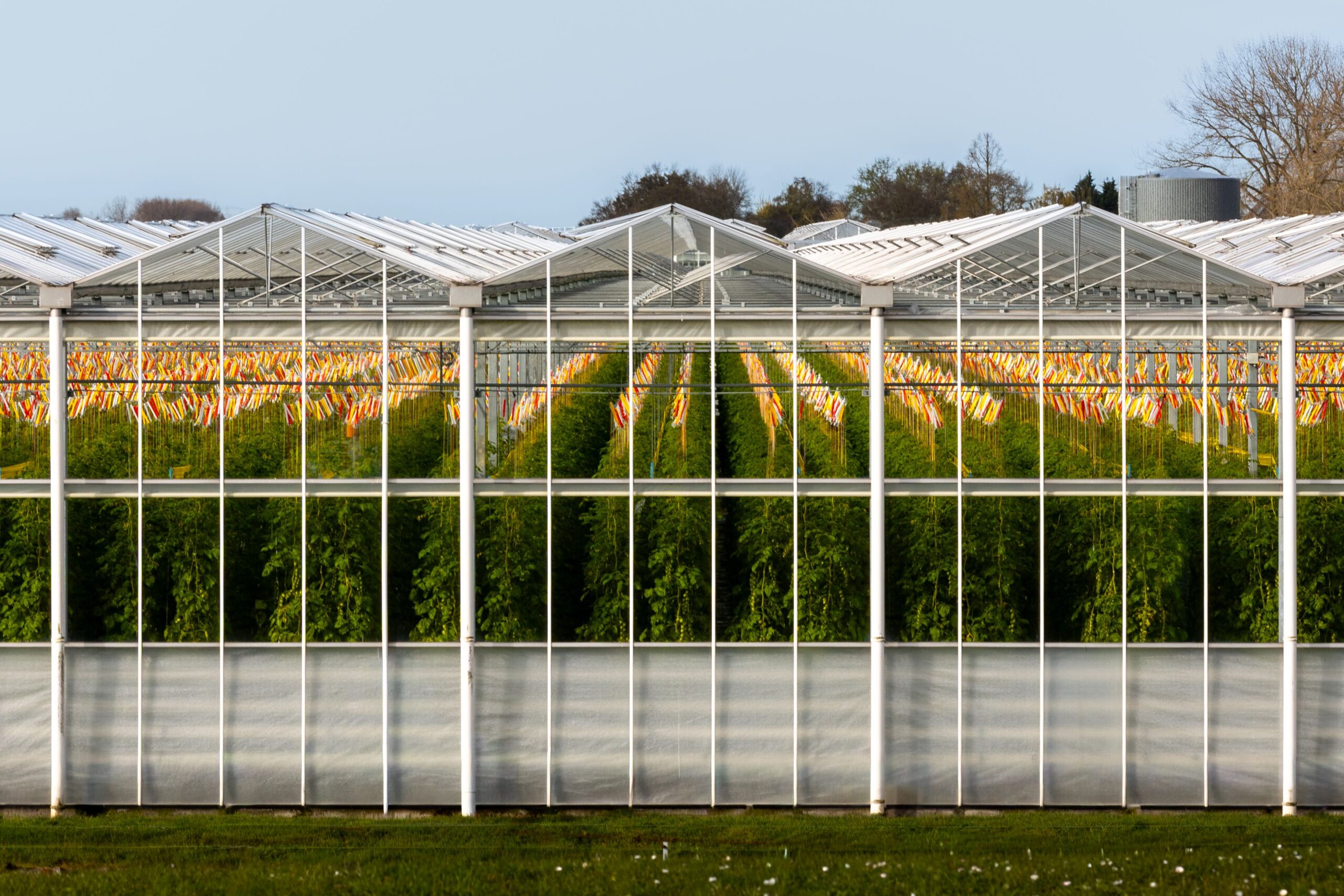
At S-Chelate Plant Nutrition, we continue to be fascinated by the importance of iron and by the practical difference that chelated iron can make. We are also pleased to say that our supply of S-Chelate-O Iron Chelated Iron into the global mega organic greenhouse sector is starting up again after a major revamp of our manufacturing process, supporting growers who rely on clean, stable and highly efficient nutrient delivery systems.
The same principles of solubility, stability and gentle precision can also be seen in smaller growing environments. One example is the use of S-Chelate-O Cultiv-8 at a very low level in a long established tropical aquarium, where it has helped keep plants in good condition while a remarkable Corydoras Catfish continues to live out a very long life.
Key Takeaways
- Iron is a vital micronutrient for plant health, helping support chlorophyll formation, photosynthesis and healthy growth.
- Chelated iron is important because basic iron salts, such as ferrous sulphate, can be difficult to dissolve and keep in solution.
- S-Chelate-O Fe is highly soluble, stays in solution and is compatible with micro and macronutrients in mixing tanks and fertigation systems.
- UV transparency matters because many growers use UV sterilisation to help control microorganisms that can block nozzles.
- At very low application rates, S-Chelate-O Cultiv-8 has helped keep plants in good condition in a 180 litre planted aquarium with a long lived Corydoras Catfish.
Did you know? The same principle applies from miles of greenhouse pipework to a 4 foot aquarium: micronutrients work best when they are soluble, stable and delivered with precision.
Why Iron Is So Important To Plants
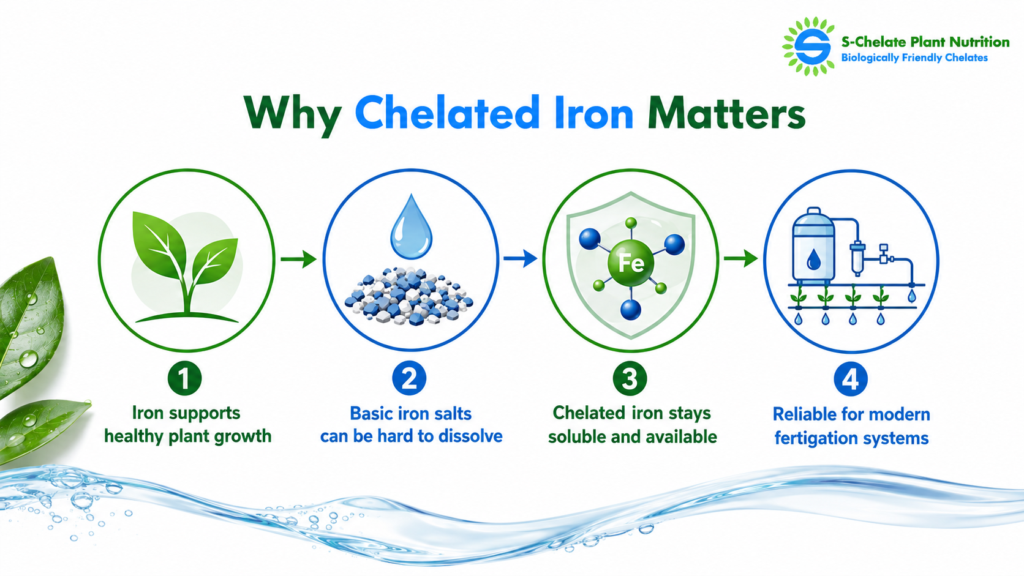
Iron is classed as a micronutrient because plants only need it in small amounts. However, small does not mean unimportant. Iron plays a crucial role in healthy plant function and is closely linked with chlorophyll formation, photosynthesis and enzyme activity.
When plants cannot access enough iron, they may develop chlorosis. This often appears as yellowing between the veins of younger leaves, while the veins themselves may remain greener. For growers, this is not only a cosmetic concern. Poor iron availability affects plant vigour, uniformity and crop quality.
This is particularly important in high value growing systems, where crops are expected to perform consistently. Whether the crop is grown in soil, compost, hydroponics or a controlled greenhouse environment, iron has to be present in a form the plant can actually use.
For more information on spotting nutrient problems, see our guide to identifying micronutrient deficiencies in plants.
The Problem With Basic Iron Salts
Adding iron is not always enough. The important question is whether the iron remains soluble, stable and available to the plant.
Traditional iron mineral salts, such as ferrous sulphate, is difficult to dissolve and difficult to keep in solution. If the Iron source becomes insoluble, Iron will become unavailable to plants, even when it has technically been added to the growing system.
This will create several practical problems:
- Poor solubility in the feed solution
- Precipitation in nutrient tanks
- Sediment in pipework
- Blocked drippers, nozzles or emitters
- Inconsistent iron delivery to plants
- Reduced nutrient efficiency
In simple terms, an iron source is only useful if it reaches the root zone in the right form. If it falls out of solution before it gets there, the grower may not get the result they need.
This is why chelation is so important.
What Chelation Does
Chelation helps hold a mineral ion in a stable, soluble and biologically available form. In the case of iron, a chelated iron product helps keep the iron in solution so it can travel through the growing system and remain available for plant uptake.
At S-Chelate Plant Nutrition, our chelation technology has been developed to support efficient micronutrient delivery. The aim is to help nutrients stay soluble, stable and compatible across a wide range of growing conditions.
You can read more about our technology on our how S-Chelate works page.
S-Chelate-O Iron Chelated Iron For Global Greenhouse Production
Large scale organic greenhouse production depends on precision. Growers need nutrient solutions that mix cleanly, remain stable and move reliably through tanks, filters, pipework and fertigation equipment.
We are delighted that our supply of S-Chelate-O Iron Chelated Iron into the global mega organic greenhouse business is starting up again. These are growing environments where reliability matters enormously. Nutrients may need to travel through miles of pipework before reaching the crop, and every part of the system depends on the feed solution staying clean and compatible.
S-Chelate-O Fe is a water soluble chelated iron micronutrient powder. It contains a minimum of 13% chelated iron, quoted as elemental iron, and is Soil Association approved for use with organic crops.
For growers using advanced fertigation systems, this combination of solubility, compatibility and organic crop approval is highly valuable.
Key Properties Of S-Chelate-O Fe
| Property | Why it matters in greenhouse fertigation |
| Highly soluble | Helps the iron dissolve cleanly in nutrient solutions |
| Stays in solution | Reduces the risk of iron becoming unavailable before it reaches the crop |
| Compatible with other nutrients | Supports use alongside micro and macronutrients in mixing tanks |
| Suitable for fertigation systems | Helps nutrient solutions move through pipework, filters and emitters |
| UV transparent | Supports systems where growers use UV sterilisation |
| Soil Association approved | Certified nationally by the SA and internationally by other certifying bodies for use with organic crops |
Compatibility In Mixing Tanks And Pipework
Modern greenhouse systems are often complex. Nutrients are not applied by hand to one plant at a time. They are mixed in tanks, blended with other inputs and distributed through long networks of pipework.
This is where compatibility becomes essential.
The S-Chelate-O Fe is highly soluble, stays in solution and is compatible with other micro and macronutrients in the mixing tanks. This matters because fertigation systems must deliver nutrients evenly and reliably. Any precipitation, sediment or incompatibility can create problems across the system.
In large greenhouse production, a blocked nozzle is not a small inconvenience. It can affect crop uniformity, increase labour and reduce growing efficiency. When multiplied across large areas, small formulation problems can become significant operational challenges.
That is why stable chelated micronutrients are so useful in commercial horticulture. They are designed not only for plant nutrition, but for the real world delivery systems that growers depend on.
Our article on greenhouse fertigation explains more about why stable iron chelation matters in modern controlled growing systems.
UV Transparency And Clean Feed Solutions
Another important property of S-Chelate-O Fe is UV transparency.
Many growers use UV sterilisation to treat feed solutions. This helps reduce microorganisms in the solution, which can otherwise grow within the system and contribute to blocked nozzles and other hygiene problems.
For UV treatment to work effectively, the solution needs to allow the ultraviolet light to pass through it. If a nutrient source creates a strongly coloured solution or absorbs too much UV light, it can interfere with the process.
This is one of the practical reasons why UV transparency matters. In high value growing systems, growers need nutrient products that are not only effective for plant nutrition, but also compatible with the technologies used to keep irrigation systems clean.
S-Chelate-O Fe has been developed with these practical requirements in mind. It is designed for growers who need soluble, stable, compatible iron nutrition that works within modern fertigation and water treatment systems.
From Commercial Greenhouses To Planted Aquariums
The same principles of solubility and low level micronutrient delivery can also be relevant in much smaller living systems.
One interesting example is our use of S-Chelate-O Cultiv-8 in a planted tropical aquarium. Cultiv-8 is a highly concentrated supplementary fertiliser that provides eight essential micronutrients in a chelated form.
The product includes:
- Boron
- Copper
- Iron
- Magnesium
- Manganese
- Molybdenum
- Sulphur
- Zinc
S-Chelate-O Cultiv-8 is primarily a plant nutrition product, not a formal aquarium dosing product. However, our own aquarium experience offers a reassuring personal example of how gently it appears to behave at very low application rates in a long established tank.
Our 4 Foot Tropical Fish Tank Story
Around 10 years ago, we decided to gradually run down our 4 foot tropical fish tank. We did not want to hand the fish over to a retail tropical fish seller, so we decided to allow them to live out their lives in our tank.
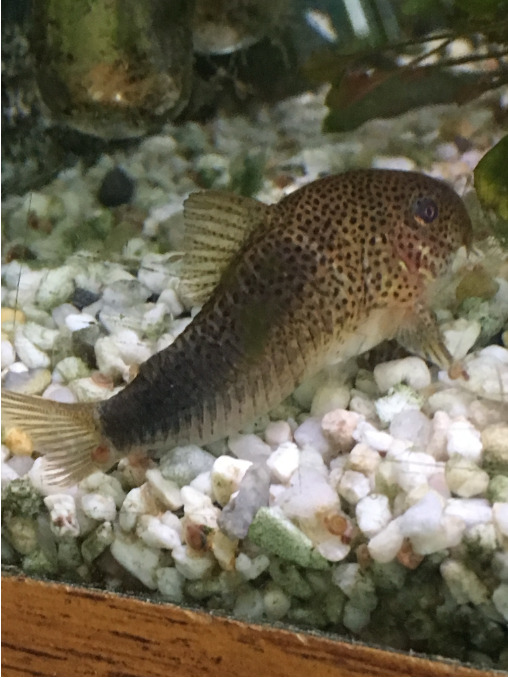
Most of the fish passed away within their normal lifespans over the following years. However, we still have a Corydoras Catfish who is with us today and must be at least 15 years old and counting.
The tank is 4 feet long and holds 180 litres of water. We add S-Chelate-O Cultiv-8 at a really low level to keep the plants in good shape. The dose used is 2.5 ml of a 10% solution into the 180 litre tank.
We add the Cultiv-8 whenever we carry out a major water change, which is now every couple of months because there is only one fish left in the tank.
The plants continue to look healthy, and the Corydoras Catfish appears to be doing well. We would not present this as a formal scientific safety trial, but it is a reassuring personal observation. At this very low application rate, Cultiv-8 has helped support the aquarium plants while the Corydoras continues to thrive in its long established environment.
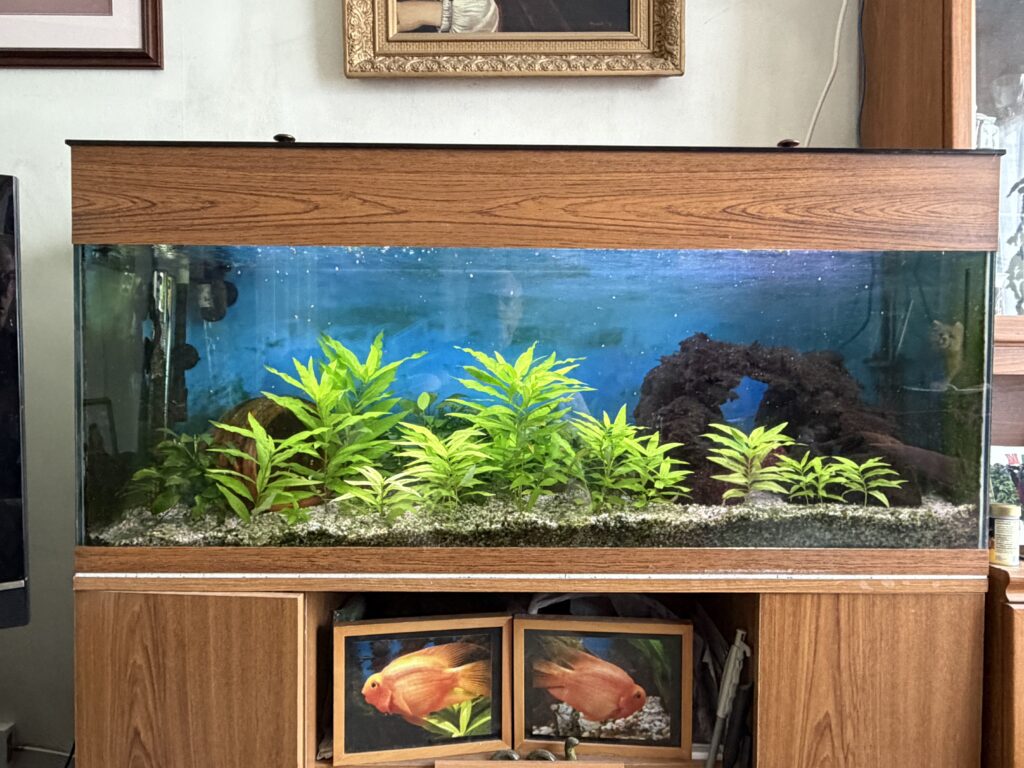
Our 4 foot tropical fish tank, now home to a long lived Corydoras Catfish and planted with support from very low level S-Chelate-O Cultiv-8 dosing after major water changes.
 Why Low Rate, Soluble Nutrition Matters
Whether we are discussing a global greenhouse fertigation system or a 180 litre planted aquarium, the principle is similar. Micronutrients are powerful because they are needed in small quantities. They must be used carefully, evenly and at the correct rate.
Good micronutrient nutrition depends on:
- Solubility
- Stability
- Compatibility
- Even distribution
- Sensible application rates
A nutrient that dissolves properly is easier to distribute evenly. A nutrient that stays in solution is more likely to reach the plant in a usable form. A nutrient that is compatible with the wider system is less likely to create operational problems.
This is the thinking behind S-Chelate Plant Nutrition. Our products are designed to support plant health with bioavailable micronutrients that work in practical growing conditions.
Precision Nutrition At Every Scale
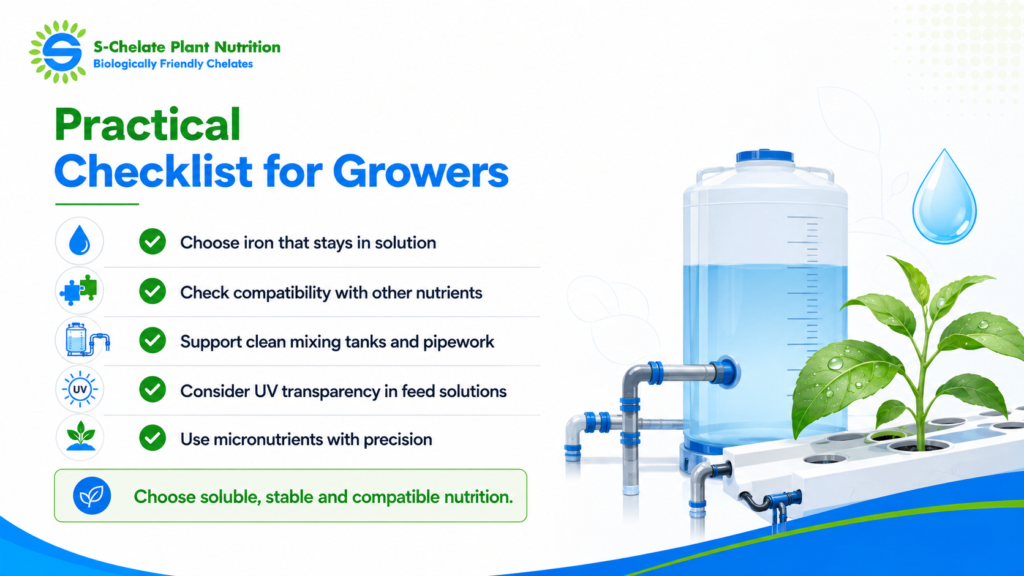
Iron remains one of the most important micronutrients in plant nutrition. It supports essential processes within the plant, and when it is not available in the right form, the effects can be seen in plant colour, vigour and performance.
For global organic greenhouse businesses, S-Chelate-O Iron Chelated Iron provides a practical solution for modern fertigation. It is highly soluble, stays in solution, works alongside other micro and macronutrients, and is compatible with the mixing tanks, pipework and irrigation systems growers rely on every day. Its UV transparency is another important advantage where feed solutions are treated to reduce microorganisms and prevent nozzle blockages.
At the other end of the scale, our aquarium experience with S-Chelate-O Cultiv-8 shows how very low level micronutrient use can help support healthy plant growth in a small living system.
From miles of greenhouse pipework to a 180 litre planted aquarium, the principle is the same: micronutrients work best when they are soluble, stable, compatible and delivered with precision.
Further Reading
- Iron Chlorosis of Woody Plants: A useful guide from Colorado State University Extension explaining iron chlorosis, why iron availability matters, and how symptoms can appear in plants.
- Effective Strategies to Correct Iron Deficiency: A horticultural article discussing iron deficiency symptoms, including interveinal chlorosis, and practical approaches to managing iron availability.
- Water Disinfection in Greenhouses: An overview of greenhouse water disinfection methods, including UV treatment and its role in reducing microorganisms in irrigation water.
- Check Your Water, Use UV: A horticultural article explaining how UV water treatment is used in greenhouse systems and why water transparency and flow are important.