

Inside Rothamsted: How Controlled Plant Trials Helped Shape S-Chelate Plant Nutrition

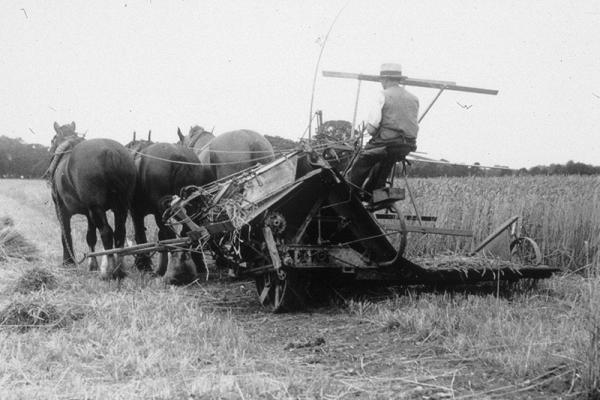
A recent visit to Rothamsted took us back to the place where some of our most important plant nutrition development work took shape.
We arranged the visit for our main raw material supplier and were given a detailed tour by the head of Rothamsted’s trial facilities. We saw the controlled-condition growing cabinets, as well as the glasshouses where we carried out our own plant trials.
When testing a micronutrient, fertiliser or other plant treatment, the product needs to be the principal variable. Temperature, humidity, light, water and the wider growing environment must be managed consistently. Without that control, it can be difficult to establish whether a result came from the treatment itself or from changing conditions.
Our laboratory and plant trial work at Rothamsted helped us move from formulation chemistry to visible plant performance.
Key Takeaways
- Controlled growing conditions help ensure that the plant treatment remains the principal variable during development trials.
- S-Chelate used Rothamsted’s controlled glasshouse facilities to compare formulations and observe plant responses over time.
- The avocado proof-of-concept trial helped shape S-Chelate-O Cultiv-8 and the complete S-Chelate 12 Star formulation.
- Controlled basil and tomato trials provided practical evidence that informed further product development.
- The Protom tomato trial led to a convenient one-part specialist feed designed to support tomatoes in demanding growing conditions.
Did you know Rothamsted raises more than 500,000 plants each year for research? Which S-Chelate trial would you most like to learn more about?
Discovering Rothamsted Before Covid
We discovered Rothamsted in 2019, during the year before the Covid pandemic, while looking for suitable laboratory and plant trial facilities close to home.
The scale of the site was immediately striking. Rothamsted brings together agricultural research, specialist laboratories, glasshouses, controlled environments and a community of agritech and science-based companies.
Its scientific history began in 1843, when John Bennet Lawes appointed chemist Joseph Henry Gilbert as his scientific collaborator. Their work helped lay the foundations of modern scientific agriculture and established important principles of crop nutrition. Rothamsted describes itself as the longest-running agricultural research institution in the world.
The 2026 Rothamsted Campus Companies Directory records more than 40 companies employing over 240 people, both on site and virtually.
S-Chelate Plant Nutrition joined the campus community in 2020. We are now a virtual resident, but our connection with Rothamsted remains an important part of our product development story and a good example of the support the campus can offer smaller agricultural businesses.
Why Controlled Conditions Matter in Plant Trials
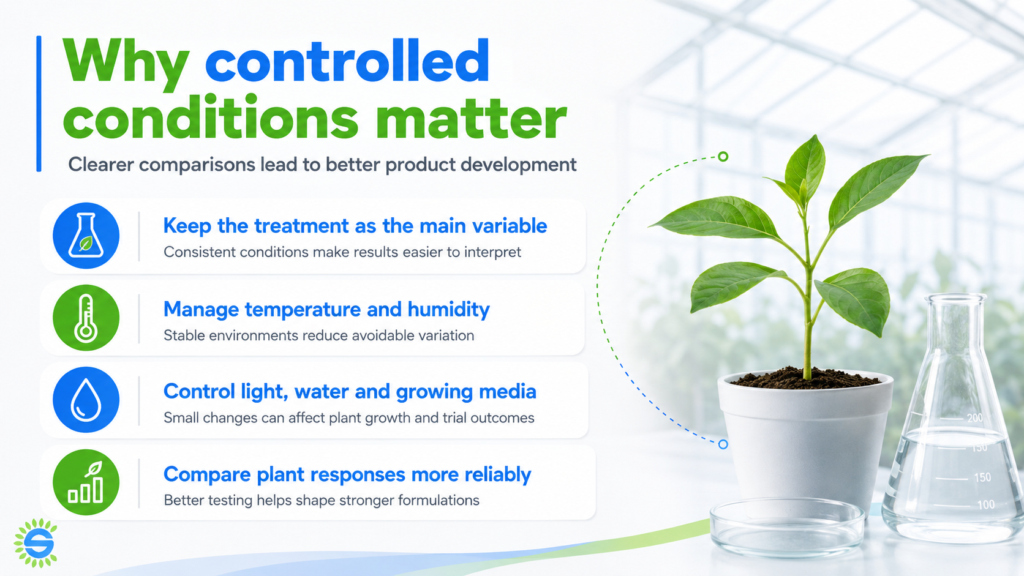 Testing the treatment rather than the weather
Plant growth is influenced by many connected factors. A stronger plant does not automatically prove that one feed is better than another. It may have received more light, warmer temperatures, a different amount of water or a growing medium with different properties.
Meaningful comparisons therefore require careful control of:
- Temperature and humidity
- Light intensity, duration and spectrum
- Water quality and irrigation
- Growing medium
- Carbon dioxide
- Plant variety
- Pest and disease pressure
Rothamsted’s controlled environments can provide conditions ranging from tropical to desert and tundra. Temperature, humidity, lighting and carbon dioxide can be monitored and controlled, while the lighting spectrum can be adjusted for different projects.
Our own work used a controlled-temperature glasshouse. This provided the consistency needed to compare feeds, monitor growth and observe how plants responded over time.
During our recent tour, we also saw controlled-condition cabinets that looked rather like large refrigerators or freezers. These offer an even tighter level of environmental control.
The tour included examples of work involving cereals, rice and gene editing. These were not S-Chelate projects, but they demonstrated the breadth of research supported by the facilities.
Controlled trials cannot guarantee identical results in every garden, greenhouse or commercial crop. They do, however, create a more reliable basis for comparison, particularly when evaluating how S-Chelate micronutrients work within different formulations.
From Cultiv-8 to a Complete Plant Feed
The avocado proof-of-concept trial
One of our most extensive early trials involved growing avocado plants from stones. Avocados were deliberately chosen because they can be difficult and inconsistent to establish. Each stone effectively became an individual test.
The programme began in autumn 2019 and compared the developing S-Chelate formulation with two established branded plant foods, identified in our published results as feeds X and Y.
S-Chelate-O Cultiv-8 came first as an optimised combination of S-Chelated micronutrients. However, micronutrients could not be assessed properly without the macronutrients plants also require. A serious deficiency in one element can restrict growth even when other nutrients are present.
The Cultiv-8 micronutrient combination was therefore incorporated into a complete feed containing the primary macronutrients needed to support plant growth. That development led to S-Chelate 12 Star.
Our first avocado case study explains how the programme was established. The final avocado trial findings record that the trial ended on 30 September 2020. The S-Chelate-fed plants were the tallest and most developed within each timescale.
The final figures recorded that 14 of 24 stones started with S-Chelate 12 Star, compared with five of 13 for feed X and six of nine for feed Y. Tissue testing also showed the highest uptake for the S-Chelate treatment in several elements, including calcium, iron, magnesium and molybdenum.
Once the trial had finished, we gave the young avocado trees to grateful Rothamsted workers.
The Basil Trial
Comparing different forms of chelated iron
Our 2021 basil trial compared S-Chelate-O Fe with the conventional chelates FeDTPA and FeEDDHA, using a balanced organic feed specially formulated for basil.
Five treatment rows were used:
- FeDTPA in basil feed
- S-Chelate-O Fe in basil feed
- FeEDDHA in basil feed
- Basil feed with no added iron
- S-Chelate 12 Star
Our published observations at 58 days showed the S-Chelate treatments producing faster and healthier-looking growth. At 72 days, four of the ten largest plants came from the S-Chelate-O Fe treatment, while another two came from the S-Chelate 12 Star group.
The plants were impressive in size, and the aroma was equally memorable for anyone who enjoys pesto.
The full S-Chelate basil trial includes the treatment layout and comparison photographs. These were our own controlled trial observations and should be understood in that context rather than as independent certification.
The Protom Tomato Trial
Investigating blossom end rot
Our most recent major Rothamsted trial focused on tomatoes and blossom end rot. A small number of growers had experienced the condition when using S-Chelate 12 Star under extreme growing conditions, so we set out to develop a more resistant specialist tomato feed.
Six experimental formulations were produced and screened. Two were selected for a controlled glasshouse trial at Rothamsted, alongside S-Chelate 12 Star and a well-known competitor’s two-part feed.
Crimson Crush F1 tomatoes were grown from seed to reduce genetic variability. Eight plants were grown with each feed. They entered the Rothamsted glasshouse on 17 July 2023, were assessed every two weeks, and the trial ended on 1 November 2023. Ripe tomatoes were inspected, picked, weighed and photographed.
| Treatment | Product format | Published observation |
| Trial feed 1 | One part | Good yield with no recorded blossom end rot |
| Trial feed 4 | One part | Good yield with no recorded blossom end rot, but the calcium source was not viable for the final product |
| S-Chelate 12 Star | One part | Highest yield, with a small number of affected fruits |
| Competitor’s feed | Two part | Good but lower yield, with some affected fruits |
Trial feed 1 was selected and launched as S-Chelate Protom. It includes a new S-Chelate calcium source and provides a complete specialist tomato feed in one product.
The one-part format also simplifies use. The competitor’s product required two solutions to be prepared separately and then combined. Protom can be mixed directly into one watering can.
Our published tomato blossom end rot trial reported no recorded blossom end rot in either experimental-feed group. S-Chelate 12 Star produced the highest yield overall. All four treatments produced high-quality, great-tasting tomatoes, and we particularly enjoyed eating the results.
How Rothamsted Supports Smaller Agricultural Businesses
Specialist glasshouses and controlled environments require substantial investment, technical knowledge and ongoing management. For a smaller product development company, reproducing facilities of this standard independently would be difficult.
Rothamsted supports external contracts from universities and companies of different sizes. Its horticultural team can provide controlled growing facilities, plant care, irrigation support, potting media and assistance from seed sowing through to harvest.
The wider campus also creates opportunities for knowledge exchange and collaboration. Our experience shows how access to the right facilities can help a smaller business conduct structured development work, compare products more fairly and make better-informed decisions about which formulations to take forward.
From Controlled Trials to a Garden Fig Tree
A personal observation from the garden
Controlled trials provide structured comparisons, but plants in real gardens also give us useful practical experience.
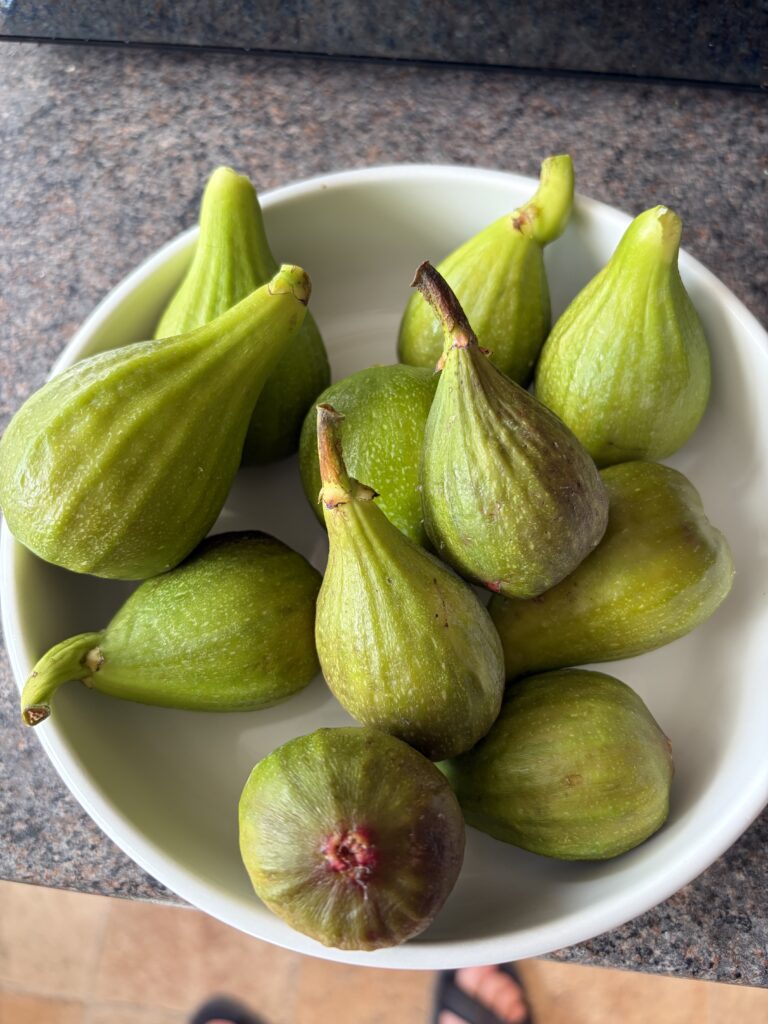
Our mature Brown Turkey fig tree has grown in a large pot for many years. It always produced a reasonable crop, but its growth became much more vigorous after being fed with Cultiv-8, S-Chelate 12 Star and, more recently, Living Feed.
The tree has grown so heavily that the pot has tipped over, helped by our reluctance to prune it. We normally see up to around 50 figs in a season, and the fruit tastes better to us than shop-bought figs.
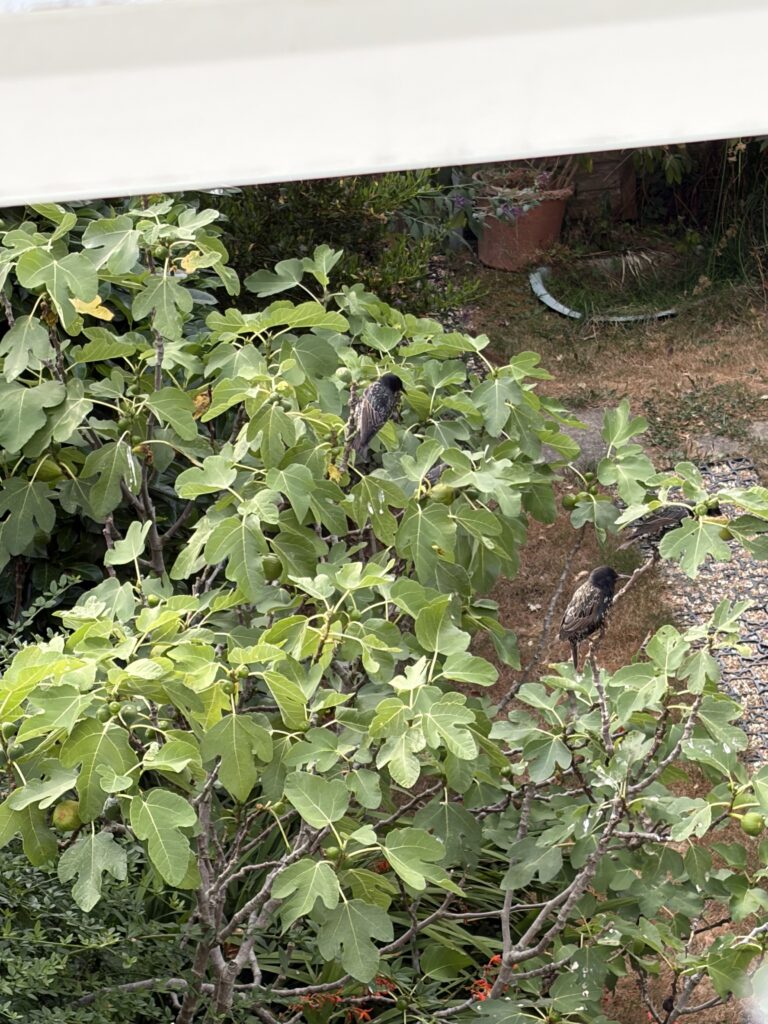
The main competition comes from local starlings. We feed them generously throughout the year, yet they still reach some of the ripening figs before we do. My wife particularly enjoys seeing the new-season chicks, so in practice the crop is shared with them.
 This is a personal garden observation rather than a controlled comparison. It does not prove that a particular treatment will produce a set number of figs, but it captures the pleasure that healthy, productive plants can bring.
Better Products Begin With Controlled Testing
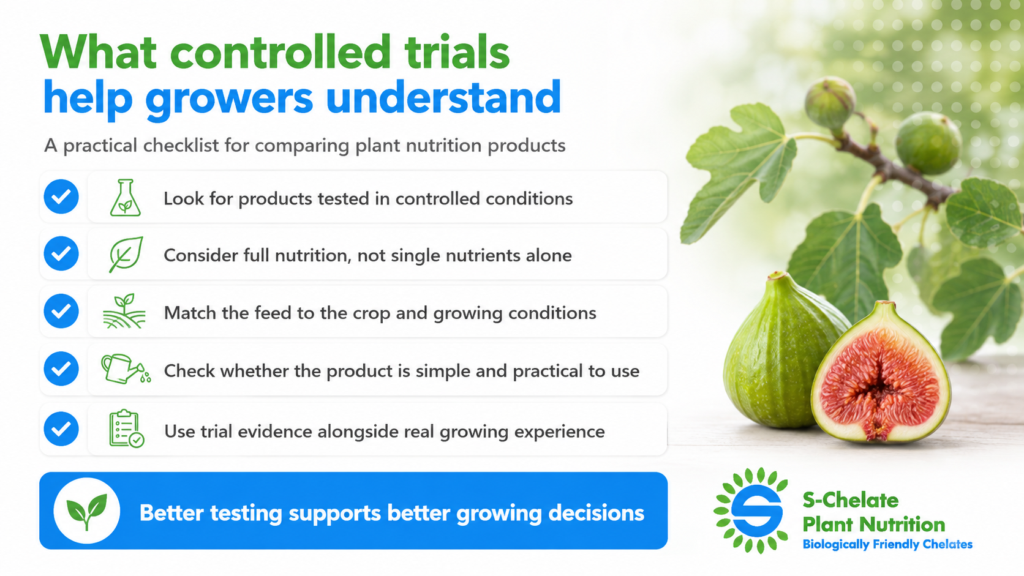 Rothamsted gave us a structured environment in which formulations could be compared, plant responses observed and development decisions based on more than theory alone.
The avocado, basil and tomato programmes each answered different questions and helped shape Cultiv-8, S-Chelate 12 Star and Protom. Together, they show why careful testing matters when plant chemistry is turned into practical nutrition.
Explore the complete S-Chelate Plant Nutrition product range for gardens, allotments, controlled growing systems and commercial crops.